
Juho Vuononvirta
Funding Expert, EU Funding, EU Consortiums
Public Funding Specialists · €400M+ in funding raised
EU Consortiums
The EU’s largest funding instruments require a multinational consortium, with the consortium coordinator bearing the main responsibility for the project. The coordinator’s role determines whether the project becomes a fundable entity or remains a good idea.
Grants acts as a partner who builds the consortium, processes the application and coordinates the project – so you can focus on the project content and strategic decisions.
Grants acts as a partner that helps build a competitive consortium, carry out the application and support project coordination throughout the funding path.
For our clients, this means a more controlled and credible EU funding process, where the consortium, application and project implementation are strategically built from the start. This allows the coordinator to focus on the content and impact of the project, and the whole thing does not fall into administrative burden.
A successful EU application starts long before writing: choosing the right call topic, clarifying the project’s focus, and ensuring that the consortium composition convinces the evaluators of impact, excellence, and implementation. A weak fit to the topic or an unbalanced consortium will ruin an otherwise good application.
In practice, we analyze your project idea against the call’s requirements, define the ideal consortium structure, and produce a realistic go/no-go assessment before you invest in the application work.
Finding the right partners is the coordinator’s most difficult task – and the most common reason for application delays. You need partners with substantive expertise, EU funding experience and a reliable track record. We leverage our extensive network and efficient technology to identify the right partners.
As coordinator, you retain the final say on consortium composition – we handle the heavy lifting, background checks and contact for you.
Once the consortium is assembled, the actual application work is a multi-faceted puzzle: multiple authors, different time zones, constantly changing versions and a tight deadline. The coordinator is responsible for ensuring that the application is completed on time, is consistent and meets all the requirements of the call.
We take care of the whole thing – the schedule, version control and writing – so that you can focus on the substantive management of the project and partner relations.
The funding decision is an intermediate stage, not the finish line. Negotiating the Grant Agreement with the Commission, drafting the Consortium Agreement and launching the project require legal, administrative and financial expertise. A poorly executed launch affects the entire project lifecycle.
We support the coordinator in the launch phase of the project to achieve an excellent outcome.
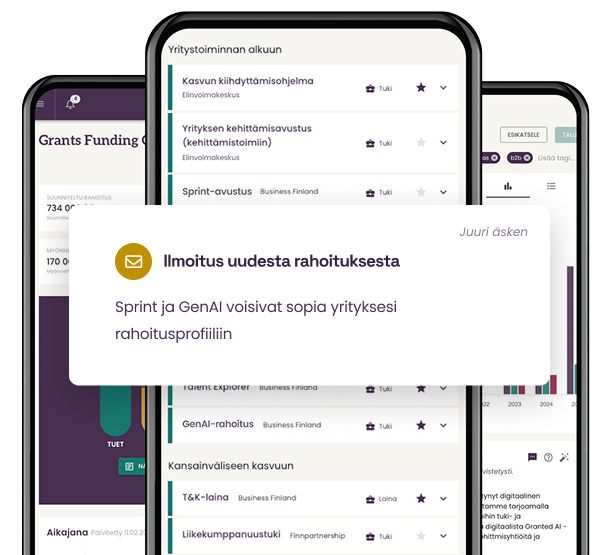
Granted AI is the core of our platform — a database of public finance instruments, investors, client information, templates and industry-specific analytics. Every recommendation we make is based on data: instrument criteria, application timelines, approval statistics and our own accumulated historical track record.
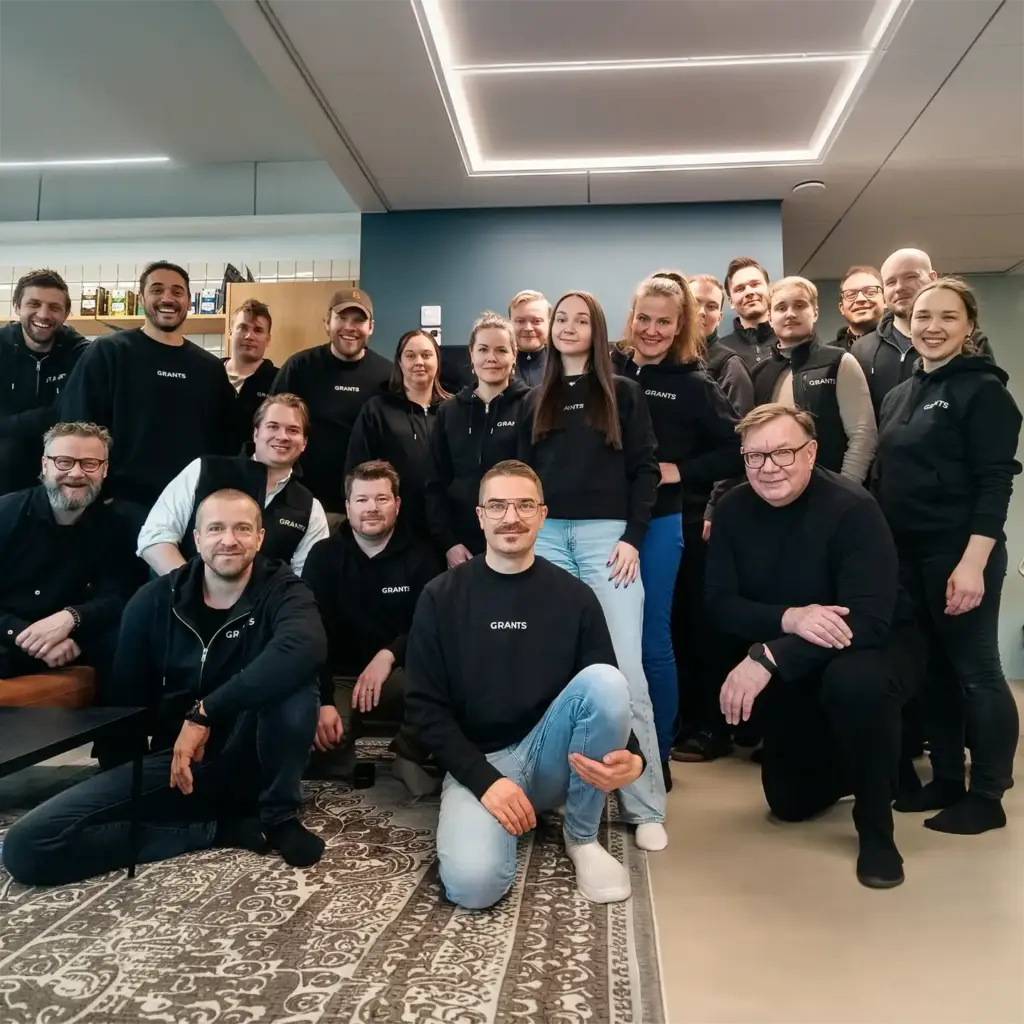
The Grants’ EU consortium team is headed by Juho Vuononvirta. Juho is an EU funding expert with extensive experience in development projects in the health and technology sectors. Juho’s technology expertise and strategic planning skills ensure companies receive high-quality support for EU consortia. Juho is supported by a professional team of international EU consortium experts.
Funding Expert, EU Funding, EU Consortiums

Funding Expert, EU Consortiums, EU Funding

Funding Expert, EU Consortiums, EU Funding

Funding Expert, EU Consortiums, EU Funding
During a free remote consultation, we will review the potential funding options best suited for your business.



FAQ - Frequently asked questions
Yes, and we highly recommend them as soon as the consortium composition begins to take shape. This protects the project idea, technical content and commercial potential before the Grant Agreement stage. After the funding decision, the Consortium Agreement takes on the role of the NDA and further specifies the rights — but before that, NDAs create trust that allows for open discussion within the consortium.
The final budget allocation is determined by the consortium together, and the coordinator has a natural leadership role in the negotiations. The allocation is based on the work package structure and the role of each partner: what the partner will do in the project, how many person-months the task requires and what the cost profile of the organization is. In Horizon Europe projects, the funder approves the overall budget as part of the Grant Agreement negotiation, but the distribution between the partners is an internal decision of the consortium.
Grants supports this process by providing benchmark information from similar funded projects, making the allocation realistic for both the funder and the partners. This helps the negotiations to proceed smoothly.
The main right of veto lies with the coordinator and core partners, as they have the most central role and responsibility in the project, and therefore their views on new partners carry the most weight. The practical decision-making rules are written into the Consortium Agreement, which clearly defines which decisions require unanimity, which require a qualified majority and which the coordinator can make alone. This brings predictability to the consortium and ensures that the inclusion of new partners supports the strategic overall project.
Grants helps to shape the decision-making model during the application preparation so that it serves the interests of both the coordinator and the core partners.
The easiest way to get a quote is to contact us via a free consultation or directly with our experts. Together, we will map out the scope of services, the potential target search situation, and the prerequisites for the success of the project before submitting a quote. This way, we ensure that the quote matches exactly what your consortium needs — and does not contain unnecessary sections or leave out essential information. The quote is typically delivered within a few business days of the discussion.
The price of the service depends on the scope of the service, the consortium, the schedule situation and other project-specific factors. For example, do we only support strategic planning, or does Grants handle the entire partner search and application process? We tailor the offer to each client individually based on a free consultation, so the price corresponds to the work that produces the most value in your project.
During a free remote consultation, we will review the potential funding options best suited for your business.